


How to froth milk is really two skills happening in about twenty seconds: putting air in, then breaking that air down into bubbles too small to see. Most people at home only do the first, which is why the result looks like bubble bath and drinks like nothing.
Properly textured milk should pour like wet paint, hold a glossy surface, and taste sweeter than the milk you started with.
What you need first
- Cold milk, straight from the fridge. You are racing the temperature, so starting cold buys you time.
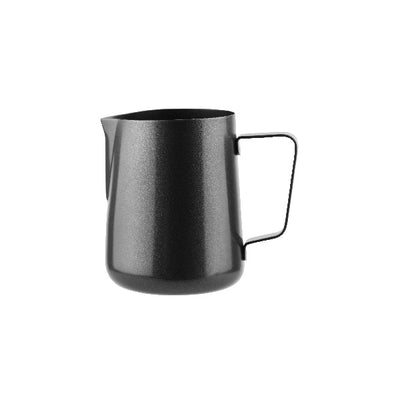
- A jug too big for the drink. Fill to just below the spout base, around a third to half. Milk expands.
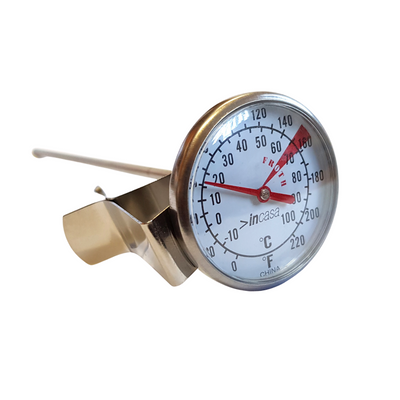
- A thermometer, at first. Until you can feel 65C through the metal, guess and you will scald it.
Never re steam milk. The proteins that trap air are already spent, and it will not foam twice.
How to froth milk with a steam wand: the stretch
Purge the wand, then sit the tip just under the surface, slightly off centre so the milk starts rotating.
You want a steady tearing sound, like paper. Not a shriek, which means the tip is too high and you are throwing large bubbles in. Not silence, which means it is too deep and you are only heating.
- Flat white: one to two seconds of tearing
- Latte: two to three seconds
- Cappuccino: three to four seconds
That is the entire difference between the three drinks. Everything after is identical.
Phase two: the spin
Drop the jug so the tip sits deeper, off centre, and the milk spins in a whirlpool. This is where large bubbles get folded down into microfoam. Keep it spinning until you hit temperature.
Stop at 60 to 65C. Above about 70C the milk proteins denature, the foam collapses, and lactose stops tasting sweet and starts tasting cooked. If the jug is too hot to hold for two seconds, you have gone too far.
Finishing
Knock the jug once firmly on the bench to pop surface bubbles, then swirl continuously until you pour. Milk separates within seconds if it sits still. If it has already split into foam on top and liquid below, swirling hard will usually bring it back.
Pour from height first to push the milk under the crema, then drop close to the surface at the end to let the foam through.
Frothing oat, soy and almond
These behave differently, and standard supermarket versions mostly will not work.
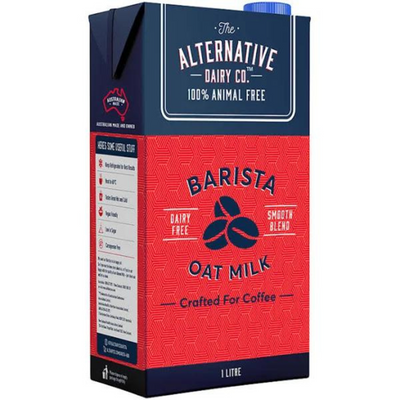
Use barista formulations. They have added protein or stabilisers precisely so they can hold foam and resist splitting against hot acidic espresso. Standard oat milk curdles on contact and will not texture.
- Oat: the closest to dairy. Stretch slightly less, it aerates fast. Stop nearer 60C.
- Soy: foams well but splits most readily. Pour into the espresso rather than the other way round.
- Almond: the hardest. Thin foam that collapses quickly, so pour immediately.
Our alternative milk range is all barista formulated for this reason.
How to froth milk without a frother or steam wand
A handheld frother into warmed milk gets you a passable cappuccino cap but never true microfoam, because it cannot spin the whole body of milk. A French press works surprisingly well: warm the milk, then plunge rapidly twenty times.
Neither will pour latte art. For that you need steam pressure, which means a machine from the home coffee machines range.
The three things that actually help
A jug you can pour from, a thermometer until you can feel 65C through the metal, and a barista formulated milk if you are not using dairy.
Common questions
How do you froth milk without a frother?
Warm the milk, pour it into a French press and plunge rapidly about twenty times. It gives you a passable foam for a cappuccino, but not the microfoam you need for latte art.
What temperature should milk be steamed to?
60 to 65C. Hot enough to feel properly hot, cool enough to stay sweet and hold foam.
Why is my foam full of big bubbles?
Too long in the stretch phase, or the wand tip too near the surface. Cut the tearing to a second or two and spend longer spinning.
Why does my milk not foam at all?
Wand tip too deep, milk already steamed once, or a blocked wand. Purge it and check the holes.
Can I froth milk in advance?
No. It separates within about thirty seconds and cannot be re steamed. Texture per drink.
Which milk foams best?
Full cream dairy, because fat carries flavour and protein holds structure. Skim foams higher but tastes thinner and the foam is stiffer.
A proper jug makes more difference than most people expect. Ours are on the barista tools page, and if you want to be shown rather than read about it, we run barista training on our own bar in Sydney.


