


How much caffeine in coffee depends less on how strong it tastes and more on how much coffee went into the cup. A double espresso tastes far more intense than a mug of filter, but the filter mug usually wins on caffeine. Here are the numbers we work from behind the counter.
How much caffeine is in a coffee, by drink
These are typical figures for a standard preparation. Treat them as a range, not a lab result, because dose and bean vary.
- Single espresso, 30ml: about 63mg
- Double espresso, 60ml: about 125mg
- Flat white, latte or cappuccino: the same as the shots inside it, so 63mg on a single and about 125mg on a double. Milk adds none.
- Long black: about 125mg, because it is a double shot with water
- Filter or drip, 240ml: about 95mg
- Plunger or French press, 240ml: about 107mg
- Cold brew, 240ml ready to drink: roughly 150 to 200mg
- Instant, 240ml: about 62mg
- Turkish coffee, 60ml: about 50mg
- Decaf, 240ml: about 2 to 5mg
The pattern worth noticing: espresso is concentrated, not high in total caffeine. You drink 30ml of it. A filter mug is weaker per millilitre and stronger per cup, because there is eight times as much liquid.
The two things that genuinely change it
1. The bean species
Arabica carries roughly 1.2 percent caffeine by weight. Robusta carries closer to 2.2 percent, so a robusta blend can land near double. Most specialty coffee, including everything in our coffee beans range, is arabica or arabica led. Italian style espresso blends often add robusta deliberately, for crema and body as much as for the kick.
2. The dose
How many grams of coffee went in. A cafe double using 20g of coffee has more caffeine than a home double using 14g, brewed on the same machine, from the same bag. This is the single biggest variable and the one nobody measures at home.
Dark roast is not stronger, and this is why
Roasting burns off a small amount of caffeine, so by the individual bean a dark roast has marginally less. But dark roast beans are also less dense, having lost more water. Scoop by volume and you fit more dark beans in the scoop. Weigh instead, and the two land within a few percent of each other.
So dark roast tastes stronger because it tastes more roasted, not because it is more caffeinated. If you want less caffeine, change the dose or the bean, not the roast. Our dark roast and light roast pages explain what each one actually changes in the cup.
Why cold brew catches people out
Cold brew is steeped for 12 to 24 hours at a high coffee to water ratio, usually around 1:8 for a concentrate. Long contact time and a heavy dose extract a lot of caffeine, and because it is served cold, over ice, and tastes sweet and low in acid, it goes down like an iced tea. A 400ml cup of ready to drink cold brew can carry more caffeine than two double espressos.
If you are drinking it in the afternoon, that is worth knowing. We cover the method in how to make cold brew coffee.
How much is too much
General health guidance for most healthy adults sits around 400mg of caffeine a day, which is roughly three to four double shot coffees, and around 200mg during pregnancy. Individual tolerance varies a great deal, and caffeine has a half life of about five hours, so a 3pm coffee is still half working at 8pm. This is general information rather than medical advice, so talk to your doctor about your own situation.
If you want the taste without the caffeine
Decaf is not caffeine free, but at 2 to 5mg a cup it is close enough that ten cups of decaf still sit below one regular coffee. The process matters more than most people realise, and mountain water process decaf keeps far more of the flavour than solvent decaf. We wrote about that in how decaf coffee is made, and stock it on the decaf coffee page.
If you want less caffeine
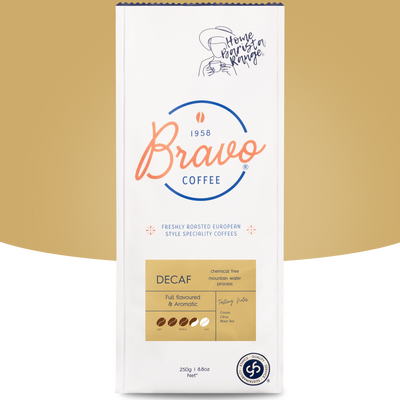
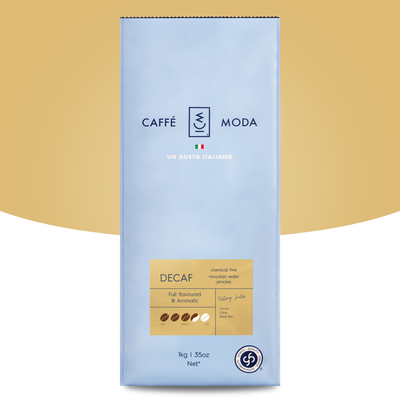
Decaf is the only real lever. Both of these are mountain water process, so the caffeine comes out with water rather than solvents and the flavour survives it.
Common questions
How much caffeine is in a shot of coffee?
A single espresso shot of about 30ml carries around 63mg of caffeine. A double shot, which most Australian cafes use for a flat white, latte or cappuccino, is about 125mg.
How many mg of caffeine are in a cup of coffee?
About 95mg for a 240ml filter coffee, around 107mg for plunger, about 62mg for instant, and about 125mg for a double shot milk coffee. Dose and bean move these numbers more than anything else.
Does espresso have more caffeine than filter coffee?
Per millilitre yes, per serving usually no. A double espresso is about 125mg in 60ml. A filter mug is about 95mg in 240ml. Drink a large filter and you will often take in more.
Does a flat white have more caffeine than a latte?
No. If both are built on the same number of shots they carry the same caffeine. The difference between them is milk texture and ratio, which we explain in flat white vs latte.
Does a finer grind increase caffeine?
Slightly, because finer grounds extract faster and more completely. The effect is real but small next to changing the dose.
How much caffeine is in Turkish coffee?
About 50mg for a standard 60ml serve. The grounds are unfiltered and the coffee tastes very intense, but the serve is tiny, so the total is lower than a double espresso.
Is decaf coffee completely caffeine free?
No. Regulations allow a small residual, so expect 2 to 5mg a cup rather than zero.
If you want to control your intake properly, start by weighing your dose. Our coffee beans are ground to your brew method the day they ship, so you know what is going into the cup.


