


How to make cold brew coffee is mostly a question of ratio and patience. There is no heat, no pressure and nothing to burn, which makes it the hardest coffee to get badly wrong and the easiest to get boringly weak.
Cold brew is coffee steeped in cold water for 12 to 24 hours, then filtered. Because it never gets hot, it extracts far less of the acidity and bitterness that heat pulls out, which is why it tastes smooth and sweet even from beans that would be sharp as an espresso.
How to make cold brew concentrate: the ratio
Everything else is detail. Weigh the coffee, do not scoop it.
- Concentrate, 1:8. 125g coffee to 1 litre water. Dilute one to one with water or milk when serving. This is what cafes make.
- Ready to drink, 1:15. 65g coffee to 1 litre water. Pour and drink, no dilution.
Start at 1:8 if you are unsure. A concentrate keeps better, takes up less fridge space, and you can always add water. You cannot take it out.
The method
1. Grind coarse
Coarser than plunger, close to raw sugar. Fine grounds over 12 hours will over extract and turn muddy and bitter, and they clog whatever you filter through. If you only have one grinder setting, err coarse.
2. Combine and stir once
Cold filtered water straight from the tap. Stir once to wet all the grounds, then stop. Agitating it repeatedly does not speed it up, it just muddies the result.
3. Steep 12 to 24 hours
On the bench for 12 to 16 hours, or in the fridge for 18 to 24. Room temperature extracts faster. Past about 24 hours you gain very little and start picking up woody flavours.
4. Filter twice
Once through a fine mesh to take the bulk out, then again through a paper filter for clarity. Do not squeeze the grounds. Everything bitter is in that last pressed liquid.
5. Keep it cold
A concentrate holds up in the fridge for about two weeks. Diluted, drink it within three or four days.
Cold brew is not iced coffee
This trips people up constantly. Iced coffee is brewed hot and then chilled, so it keeps the brightness and acidity of hot coffee. Cold brew never sees heat, so it is rounder, sweeter and lower in perceived acidity, and it tastes noticeably different.
Neither is better. If you want a sharp, fruity cold drink, brew it hot over ice, which we cover in how to make iced coffee. If you want smooth and chocolatey, cold brew it.
Which beans to use
Cold brew flatters darker, chocolatey coffee because it strips out the harshness that usually comes with a dark roast. A dark roast that tastes ashy as espresso can be excellent cold.
Light roasts and delicate single origins mostly get muted by the method. You lose the florals and keep the body, which is an expensive way to make a mild drink.
If you would rather skip the 24 hours entirely, we stock a ready made cold brew concentrate, including a decaf version.
The two mistakes
Grinding too fine. The most common one by far. It produces a cloudy, bitter brew and a filter that will not drain.
Under dosing. Cold water extracts inefficiently, so a ratio that would make good hot coffee makes weak cold brew. If yours tastes like coffee flavoured water, add coffee rather than steeping longer.
Cold brew, with or without the wait
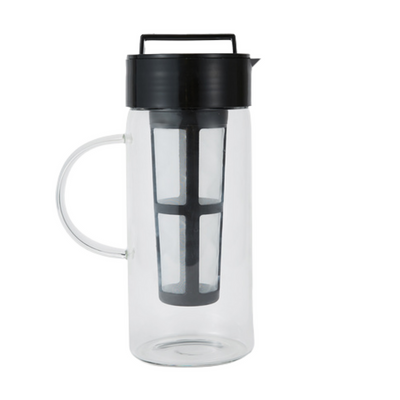
The jug does the steeping and the filtering in one. The concentrate skips the 24 hours entirely, and dilutes one to one.

Common questions
How do I make cold brew concentrate at home?
Use a 1:8 ratio: 125g of coarsely ground coffee to 1 litre of cold filtered water. Stir once, steep 12 to 16 hours on the bench or 18 to 24 in the fridge, filter twice, then dilute one to one with water or milk. It keeps about two weeks in the fridge.
How long should cold brew steep?
12 to 16 hours at room temperature, 18 to 24 in the fridge. Beyond 24 hours it gets woody rather than stronger.
Does cold brew have more caffeine?
Usually yes, because of the high dose and long contact time. A 240ml serve of ready to drink cold brew can run 150 to 200mg. We break the numbers down in how much caffeine is in coffee.
Can I make cold brew in a plunger?
Yes, and it is the easiest way to start. Combine, steep on the bench, then press gently and pour immediately. Do not leave it sitting on the grounds after pressing. Plungers are on the plunger and pour over page.
Why is my cold brew cloudy?
Grind too fine, or the grounds were squeezed during filtering. Go coarser and let it drain under gravity.
Should I use filtered water?
Yes. Coffee is almost entirely water, and there is no boiling step here to drive off chlorine taste.
Our coffee beans can be ground coarse for cold brew before they ship, so you do not need a grinder to start.


