


Flat white vs cappuccino is the closest comparison on the menu, because unlike a latte these two are served in a similar sized cup. The espresso is the same. The milk volume is close. What separates them is entirely what happens in the jug.
Flat white vs cappuccino (or cappuccino vs flat white): the difference
A flat white is steamed milk with thin microfoam folded all the way through it, poured flat and glossy. There is no distinct foam layer. It should drink the same from the first sip to the last.
A cappuccino is deliberately layered: espresso, then milk, then a thick cap of foam on top, often dusted with chocolate. The first sip is foam. The middle is milk and coffee. It changes as you go.
Both usually sit between 150 and 180ml, which is why they are so often confused.
What each one tastes like
The flat white is denser and more even. Because the foam is worked into the milk instead of floating on it, every mouthful carries the same ratio of coffee to milk. That consistency is the whole appeal.
The cappuccino is more dramatic. The airy cap is light and slightly sweet, the body underneath is stronger than a latte, and if it is dusted you get chocolate on the nose before anything else. It is a drink of contrasts rather than a smooth one.
Which carries good beans better
The flat white, comfortably. Air dulls aroma, and a thick foam cap sits between your nose and the coffee. If you have bought a single origin worth tasting, a flat white will show you more of it.
This is the practical reason specialty cafes in Australia lead with flat whites. Our single origin and light roast beans are far more expressive under microfoam than under a cap of foam.
Making the two from one jug
The technique diverges in the first few seconds of steaming.
- Flat white: stretch for one to two seconds, then submerge the tip and spin until the milk is glossy. Almost no audible tearing.
- Cappuccino: stretch for three to four seconds, listening for a steady tearing, then submerge and polish. More air, more volume in the jug.
Everything after that is the same: stop at 60 to 65C, knock the jug once, swirl until it looks like wet paint, and pour. The full method is in how to froth milk like a barista.
The cup changes the drink
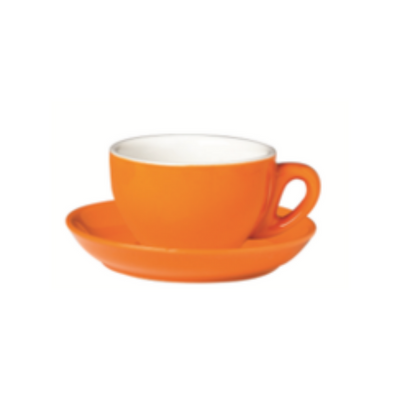
A cappuccino needs a rounder, deeper bowl so the foam has somewhere to build. A flat white suits a shallower tulip shape that keeps the milk and crema close together. Pour a flat white into a cappuccino bowl and it will look thin and taste flatter, which is a genuine equipment problem rather than a technique one. Both shapes are on the cups and saucers page.
The two cup shapes
This is the difference described above, in the two shapes. The tulip keeps the milk and crema close together for a flat white. The bowl gives a cappuccino somewhere to build its foam.

Common questions
Is a flat white stronger than a cappuccino?
They generally use the same shots, so the caffeine matches. A flat white tastes more coffee forward because there is more liquid milk carrying the espresso and less air.
Which has more milk?
A flat white has more liquid milk. A cappuccino has a similar total volume, but a good part of it is foam, which is mostly air.
Should a flat white have latte art?
Usually yes. Properly textured microfoam pours art naturally, so a pattern is a reasonable sign the milk was steamed well. A cappuccino with a very thick cap is harder to pour art into.
What about a latte?
A latte is the milkiest of the three, in a larger cup with a thin foam layer. See cappuccino vs latte for that side of it.
Why does my flat white have bubbles on top?
Too much air in the stretch. Cut the stretching phase to one or two seconds and spend longer spinning the jug to break the bubbles down.
If you are choosing beans for milk coffee generally, a medium roast is the most forgiving across both drinks.


