Grade names on matcha are not regulated. Nobody certifies them, and any producer can print any word on a pouch. That said, the distinction behind the words is real, it comes from the leaves, and it decides whether your matcha is worth drinking straight.
What actually separates them
Three things: leaf age, what gets removed before grinding, and how it is ground.
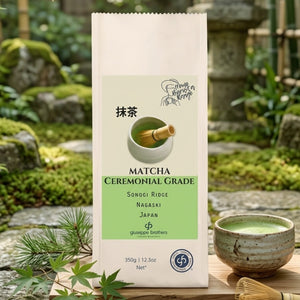
- Ceremonial grade — the youngest leaves of the first spring harvest, shaded longest. Stems and veins stripped out entirely. Stone ground slowly, around 30 to 40 grams an hour, because heat from fast grinding damages the flavour.
- Culinary grade — later harvests and older, lower leaves. More stem and vein left in. Often machine ground faster and coarser.
The stems and veins are the point. They are where the bitter catechins concentrate, and leaving them in is most of why culinary grade tastes harsher.
How to tell them apart
| Ceremonial | Culinary | |
|---|---|---|
| Colour | Vivid, almost fluorescent green | Duller, olive or yellowish green |
| Texture | Fine as talc, clumps softly | Slightly gritty |
| Taste | Sweet, umami, clean short finish | Astringent, grassy, bitter finish |
| Drunk with water | Pleasant on its own | Harsh |
| Under milk and sugar | Gets lost | Cuts through |
The mistake in both directions
People make this error symmetrically, and both halves cost money.
Baking with ceremonial grade wastes it. The delicate sweetness and umami you paid for are destroyed by oven heat and buried under butter, sugar and flour. What survives is the colour, which culinary grade also provides at a fraction of the price.
Drinking culinary grade straight is why a lot of people decide they dislike matcha. Whisked with water alone it is bitter and thin, and that is not the drink failing, it is the wrong grade for the job.
So which do you buy
- Drinking it with water — ceremonial, no argument.
- Baking, ice cream, desserts — culinary. It is built for it and costs less.
- Milk tea and sweetened iced drinks — culinary. It needs to survive the milk.
- A quality matcha latte with minimal sugar — ceremonial, if you want to taste the matcha rather than the sweetener.
- You are new and unsure — buy a small ceremonial tin. Knowing what good matcha tastes like is the reference point everything else is judged against.
Why ceremonial costs what it does
Stone grinding is the bottleneck. A granite mill turning slowly enough not to heat the leaf produces about 30 to 40 grams an hour — a single 60g tin is roughly two hours of milling before you count shading, hand picking and de-stemming. That is the price, and it is also why suspiciously cheap "ceremonial" matcha usually is not.
Storage, which matters more than grade
Ground leaf oxidises quickly. Light, heat, air and moisture all degrade it, and degraded ceremonial grade is worse than fresh culinary grade. Keep it sealed, cool and dark, and use it within about two months of opening. Do not store it above the stove, and do not decant it into a clear jar on the bench however good it looks.
We stock both: ceremonial and culinary grade matcha powder. If you are working out what matcha should taste like, start with the ceremonial tin.