


Coffee is about 15% oil, and that oil coats everything inside a grinder. Within a few weeks it goes rancid, and because every fresh dose passes through it, a dirty grinder makes every coffee taste stale no matter how fresh the beans are. Grinders are also the most neglected piece of equipment in most kitchens and plenty of cafes.
How often
- Home: a quick clean monthly, a deep clean every few months.
- Cafe: brush out daily, cleaning granules weekly, strip and deep clean monthly.
- Straight away if you switch to a very oily dark roast, or if the grinder has sat unused with beans in the hopper.
The easy way: cleaning granules
Grinder cleaning granules are grain based tablets you grind exactly like coffee. They absorb the oils and carry the loose grounds out with them, so the burrs and the chute get cleaned without any disassembly at all.
- Grind out or tip out the beans, then run the grinder empty for a few seconds.
- Pour in the granules and grind them through at your normal setting.
- Grind through a small dose of coffee afterwards and throw that dose away. It will look and smell of the cleaner.
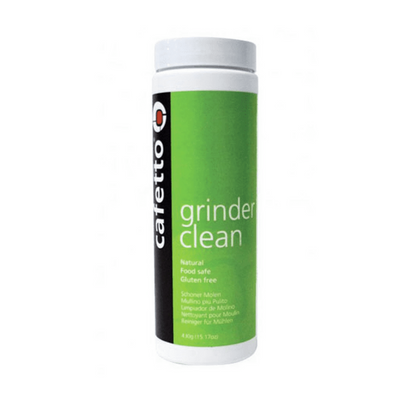
Some formulas are gluten free and made without binders or added chemicals, which matters if the grinder is in a cafe serving people with allergies.
The deep clean
Once the granules stop making a difference, take the top burr out. On most home and commercial grinders that means emptying the hopper, lifting it off, and unscrewing the burr carrier. Photograph the position first if the grinder is stepped, so you can return to your setting.
- Brush the burrs and the burr chamber with a dry brush. Never use water on burrs, they are steel and they will rust.
- Vacuum or blow the chute out, which is where retention hides.
- The hopper is plastic and holds oil badly: wash it in warm soapy water and dry it completely.
- Reassemble and expect to re-dial your grind, since the burrs will not sit identically.
Retention: the everyday version of the problem
Every grinder keeps some ground coffee in the chute between doses. That is why the first shot after a rest tastes flat. A short purge of a gram or two, or a tap on the body, pushes the stale grounds out. A dosing cup catches the lot so nothing sits in the fork of the portafilter either.
Signs it is overdue
The grind looks clumpy rather than loose, the motor sounds like it is working harder, the same setting suddenly runs slow, or you can smell something sour when you open the hopper. Any of those and it is not the beans, it is the grinder.
Once it is clean you will need to reset the grind, and the coffee grind size chart is the fastest way back. If you are still choosing a grinder, see best coffee grinder for home espresso.


